Introduction
Before addressing this issue, many of us may not be aware of the manufacturing process and material sources of products like bagasse paper plates. Therefore, we need to understand and familiarize ourselves with this product. Below, we will analyze the product based on its manufacturing process and materials. Corresponding advantages will inevitably have corresponding disadvantages, as follows:

Source of materials

Wood
There are many types of wood available, including pine and poplar. Wood fiber is arguably the best material among all options, resulting in BBQ disposable plates with high strength and good toughness, making it an excellent material source.

Bamboo
Bamboo is a rare and valuable material source for making the best paper plate holders. Products made from this material retain their natural color. Bamboo fibers are excellent, resulting in products with very good strength and toughness.

Sugarcane
Sugarcane bagasse is a very popular material in the domestic market, and a very traditional and sustainable material. White bio-disposable plates made from sugarcane bagasse are currently the most common and classic product on the market.
Manufacturing process
01
Slurry preparation
We process all the materials into very fine fibers. These fibers are mixed with purified water to produce pulp. Our pulp molding dies are mesh-like, and due to their special structure, they are ideal for producing high-quality paper plates for hot food.
02
Pressing
After pulping, the beige paper plates undergo a pressing process. High-pressure equipment is used to mold and press the pulped product, removing excess water and drying it. This entire process is carried out on fully automated production machines, resulting in very fast production speed and efficiency.
03
Molding
The bulk disposable dinnerware is basically formed after the pressing process. After molding, the products need to be cut and shaped, and some products require secondary punching. These steps cannot be completed on the main production line and must be done using smaller, secondary processing equipment.
04
Testing
All products, whether catering disposable plates, bowls, or cups, require testing. Because we use plant fibers as our raw material, it’s inevitable that some plant fiber husks will be present. These husks lack fiber and are dark in color, appearing as black spots on the product surface, rendering them substandard.
05
Packaging
All bulk disposable tableware undergoes testing before packaging begins. Packaging is done according to customer requirements. We have fully automated packaging lines and labeling machines, which can basically meet all our customers’ wholesale and retail needs.
06
Transportation
Most bulk paper plates and cups are shipped in full containers. Shipping smaller quantities would result in very high freight costs. For full container shipments, in addition to offering CIF terms, we also support DDP or DDU terms.
Disadvantages of bagasse plates
- Poor durability:
Sugarcane fiber has low hardness. If the manufacturing process is poor or the thickness is insufficient, catering paper plates may soften, deform, or even break when holding heavy, hot, or watery foods. Therefore, it is essential to choose products from reputable manufacturers to ensure product strength and hardness.
- Poor structural strength:
Compared to plastic or metal plates, sugarcane bagasse custom paper plates wholesale have limited weight-bearing capacity and are not suitable for holding large quantities of food or stacking products. Because of this, our products are not available in very large sizes, and for larger sizes, we recommend increasing the thickness to improve load-bearing capacity.
- Poor leak resistance:
Sugarcane fiber itself is absorbent. If no waterproof coating is added or the manufacturing process is inadequate, sugarcane pulp custom disposable plates may leak oil or water, especially when holding soups or other liquid foods. Therefore, you need to clearly understand the intended use of these products.
- High product cost:
Whether small cute disposable plates or large 14-inch paper plates, the large-scale production of sugarcane bagasse plates is currently limited and requires a significant amount of manual labor. The processing techniques (such as high-temperature pressing and mold forming) are energy-intensive, resulting in higher costs than traditional plastic tableware.
- High mold cost:
Different sizes or styles of bio paper plates require specific molds for production. Each product has a corresponding mold, and each mold is unique. The cost of these molds is very high, ranging from $5,000 to $20,000. You can receive significant support from us in this regar, and you have to find a professional factory for your customized product.
- Fluorine-related risks:
Some manufacturers add PLA (polylactic acid) coatings or chemical waterproofing agents to the sugarcane pulp to enhance water resistance. If the coating is not completely biodegradable, it may negatively impact environmental friendliness. However, to improve oil resistance, we add oil-resistant agents to our products. Most oil-resistant agents contain fluorine and not good.
- Mediocre user experience:
Paper pulp-based Chinese disposable plates are typically recommended for use within a temperature range of -10℃ to 100℃. Exceeding this limit may cause the product to soften. However, our products are very safe for use in microwave ovens. They may absorb moisture and become moldy in humid environments, while they may become brittle in dry environments.
- Requires specific conditions for degradation:
Almost all cool disposable plates are biodegradable. Complete degradation is usually very fast in professional industrial composting facilities (with controlled temperature, humidity, and microbial environment). Degradation is also possible in natural soil or home composting, taking 90-120 days under favorable conditions, or possibly six months to a year under less favorable conditions.
- Monotonous appearance:
The best disposable plates for hot food are mostly light yellow or pure white made from virgin pulp. The surface may retain a rough, fibrous texture, making them less aesthetically pleasing than ceramic or melamine tableware. These products do not come in a variety of colors, and customization with logos or other designs requires separate production, which would be very expensive.
- Inconsistent quality control:
Whether it’s a large factory or a small manufacturer producing custom paper plates, cups, and napkins, due to material limitations, the weight of each product is not stable during the production process and may fluctuate slightly. However, consistent product quality is very important to the market and customers, so it’s crucial to choose a reputable and professional manufacturer. Products from small factories often have inconsistent quality.
- Safe risks:
Since all sugarcane bagasse cream disposable plates are used for food, the environmental requirements during the production process are very strict. Many unqualified factories produce products with numerous safety hazards and unstable quality. However, we can provide you with a variety of high-quality products.
- Raw material risks:
The raw material for custom paper plates, cups, and napkins is plant-based, and the supply of sugarcane bagasse is subject to seasonal and regional limitations. Insufficient raw materials can significantly impact production capacity. When most raw materials or finished products require long-distance transportation, it results in very high product costs. Despite this, we can still guarantee a production capacity of 600 containers per month.
Summarize
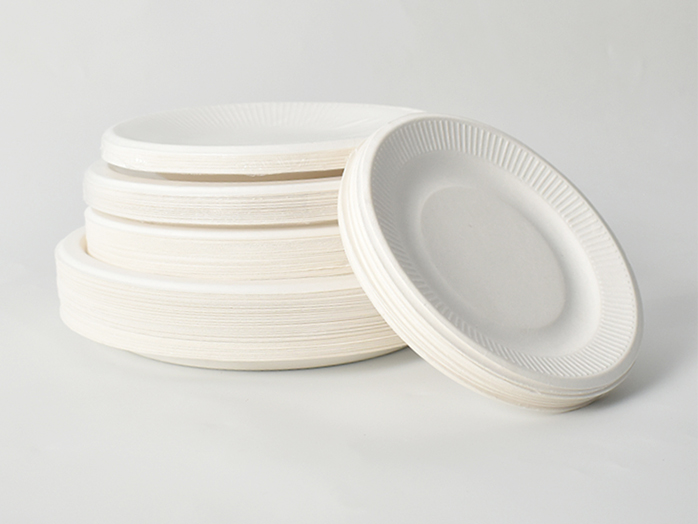
Cute paper plates and napkins are more suitable for specific scenarios (such as large events where they replace disposable plastic tableware, or for takeout packaging), but there is still room for improvement in terms of durability, cost, and biodegradability. This is a very long-term task and goal, and there are many things to consider when choosing them. Here are a few points to keep in mind:
Certification Options
Whether it's 7-inch or 11-inch disposable plates, we have the corresponding certifications such as OK Home, FDA, and biodegradable reports to support your product sales and market demands. You can obtain samples from us for testing.
Factory Selection
Choosing a professional factory to provide you with high-quality 8-inch disposable plates is very important, as it is a necessary condition to guarantee your product's after-sales service and quality. Of course, if you have customized product requirements, you need to choose an even more professional factory to assist you.