Against the backdrop of evolving consumer preferences, high-end dining has long ceased to be merely about “good taste”—it is a holistic experience encompassing visual appeal, tactile sensation, flavor, and ambiance. From Michelin-starred restaurants to Black Pearl award winners, from haute Japanese cuisine to refined French gastronomy, the tableware that carries each dish before it reaches the table has become an indispensable part of brand storytelling.
In the realm of disposable tableware and packaging, a frequently misunderstood truth is that “disposable” does not equate to “cheap.” On the contrary, for high-end catering, the disposable tableware used in takeout, delivery, banquet leftovers, and outdoor dining is becoming a critical touchpoint for brand image extension. Today, let’s explore: when high-end catering buyers focus on product texture, how do they evaluate its alignment with their own brand identity?
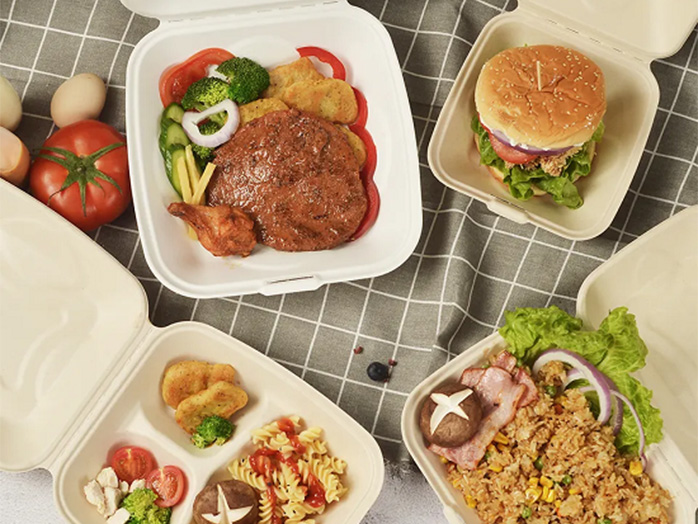
I. Why Are High-End Caterers Beginning to Value the Texture of Disposable Tableware?
In the past, disposable tableware was often seen as a purely functional tool—”use once and discard”—as long as it could hold food without leaking or burning hands. But today, with rising average takeout order values, an increase in premium delivery scenarios, and consumers’ dual focus on environmental sustainability and aesthetics, disposable tableware has begun to “step into the spotlight.”

A Complete Closed-Loop Brand Experience
When a customer spends hundreds of dollars on a premium sushi or steak delivery, the moment they open the packaging, if they see cheap foam containers or rough paper bowls, brand goodwill instantly diminishes. Conversely, if they find textured, thoughtfully designed molded pulp tableware, they perceive that the brand “cares about every detail, even for takeout.”

Social Media Sharing Appeal
Premium disposable tableware inherently possesses “photogenic” qualities. On Instagram, Xiaohongshu, Douyin, and other platforms, the texture, color, and shape of tableware frequently appear in user unboxing and dining photos. High-end catering brands need tableware that “looks great in pictures”—not just tableware that “works.”

Environmental Sustainability and Brand Image
Affluent consumers are more sensitive to environmental issues. Molded pulp tableware—such as molded pulp plates, bowls, and meal boxes—is made from natural plant fibers like sugarcane bagasse, bamboo pulp, and reed pulp. It is biodegradable and compostable, aligning perfectly with the “responsible consumption” message that high-end restaurants wish to convey.
II. How Do Different Product Lines Match Different Brand Personalities?
As a factory specializing in disposable tableware and packaging, our product portfolio covers a broad matrix ranging from the natural molded pulp series to the paper series. Products made from different materials, with different craftsmanship and design languages, cater to high-end catering brands with distinct styles.
(A) Molded Pulp Series: Natural, Rustic, Sustainable
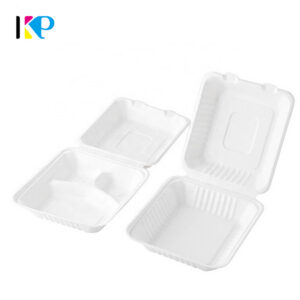
Representative Products: Molded pulp plates, molded pulp bowls, molded pulp meal boxes, molded pulp cups, molded pulp cutlery (forks, spoons, knives)
Texture Keywords: Matte, fibrous texture, warm, handcrafted feel
Suitable Brand Types:
Farm-to-Table / Organic Cuisine: The natural fiber texture of molded pulp tableware naturally aligns with the “farm-to-table” philosophy.
Vegan / Plant-Based Dining: Emphasizing environmental protection, health, and low carbon, molded pulp material is itself the best expression of these values.
Japanese Minimalist / Nordic-Style Dining: Favoring neutral tones and understated aesthetics, the low saturation and matte finish of molded pulp tableware are a perfect fit.
Premium Outdoor / Glamping Dining: Requiring lightweight, eco-friendly, and photogenic tableware, the molded pulp series perfectly balances functionality and aesthetics.
Suggested Use Case: A high-end vegan restaurant championing a “zero-waste” philosophy could use a combination of molded pulp meal boxes + molded pulp bowls + molded pulp cutlery for its takeout sets. The unified off-white or light gray fibrous texture is both practical and reinforces the brand’s “pure and natural” identity.
(B) Paper Series: Clean, Refined, Highly Customizable
Representative Products: Paper plates, paper bowls, paper meal boxes, paper cups, paper straws
Texture Keywords: Smooth, printable, rigid, clean
Suitable Brand Types:
French Patisserie / Artisan Bakery: White or light-colored paper plates are needed to highlight the colors and shapes of pastries; plate rims can feature embossing or gold foil stamping.
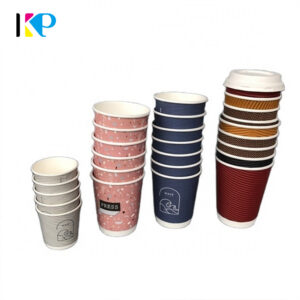
Specialty Coffee / Tea Beverages: Paper cups serve as mobile brand billboards. High-end coffee brands often use double-wall insulated paper cups with custom-designed sleeves and lids, with paper straws as standard.
Modern Chinese / Heritage-Inspired Brands: The smooth surface of paper tableware is ideal for printing intricate patterns, calligraphic scripts, or seal motifs, quickly establishing a distinctly East Asian aesthetic identity.
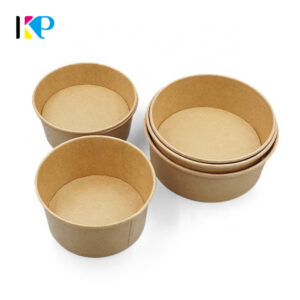
Premium Fast Casual / Burger & Bistro: Paper bowls and meal boxes used for fried chicken, fries, and salads require good stiffness, oil resistance, and a smooth opening and closing experience.
Suggested Use Case: A high-end noodle bar with a “modern Chinese” aesthetic could design its takeout paper bowls with blue-and-white patterns reminiscent of celadon porcelain, paired with matching paper meal boxes for side dishes and paper straws for cold drinks. The complete set offers cultural distinctiveness while maintaining the clean, crisp feel of paper tableware.
III. How to Evaluate Product Texture? Three Key Dimensions
When selecting products, high-end catering buyers do not merely look at price or sample aesthetics. The following three dimensions are the core criteria for determining whether a product’s texture meets standards and whether it aligns with the brand image.
1. Tactile Texture: The Customer's First Impression Upon Touch
Are the edges smooth? Rough edges on molded pulp tableware immediately lower the perceived quality.
Is the surface fine or coarse? High-end brands typically prefer a uniformly textured fiber surface that isn’t overly rough, or a smooth yet sufficiently rigid paper surface.
How does it feel to hold? Is the molded pulp cup heat-insulating? Does the paper bowl deform easily? Is the molded pulp cutlery sturdy enough to resist breaking?
2. Visual Texture: How It Actually Looks Under Lighting
Is the color uniform? Molded pulp tableware naturally has slight color variations, but excessive batch-to-batch differences are unacceptable.
Printing precision and adhesion: Are logos and patterns on paper tableware clear and smudge-proof?
How does it appear once food is served? Does it show oil or moisture stains that make it look dirty? High-end catering requires disposable tableware that remains attractive while in use.
3. Functional Texture: Balancing Practicality and Ritual
Weight-bearing and heat resistance: Can a molded pulp plate securely hold a steak? Can a molded pulp bowl contain hot soup without softening?
Seal integrity and leak prevention: Is the lid closure of the paper meal box secure? Is it safe for takeout dishes with broth?
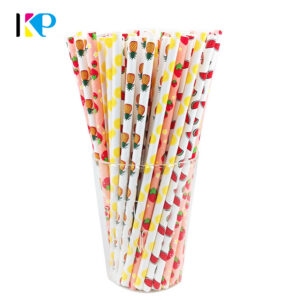
Ease of use: Is the tine design of molded pulp cutlery effective for cutting and scooping? Do paper straws remain firm without deforming when soaked?
IV. From the Factory's Perspective: How Do We Customize for "Alignment"?
As a manufacturer, we understand that high-end catering buyers are not purchasing “off-the-shelf products”—they are looking for packaging that “speaks” on their behalf.
1. Mold Customization Capability
Molded pulp tableware is produced using pulp-molding tooling, and the precision of the molds directly determines product texture. We can design specific rim curvatures, embossed textures, or raised brand logos on bowls, plates, and boxes according to brand requirements.
2. Color and Surface Finishing
Molded pulp tableware can incorporate natural or food-grade pigments to achieve low-saturation color tones such as light gray, beige, blush pink, and pale green. Paper tableware can undergo lamination, embossing, hot foil stamping, and matte/gloss finishing to meet diverse price-point needs.
3. Solution-Based Bundling
We don’t just sell individual items; we assist clients in designing complete “meal presentation sets”—for example: molded pulp meal boxes + molded pulp cutlery + paper cups + paper straws. The entire tableware set maintains a consistent style, covering everything from main courses to beverages to utensils.
Conclusion: Texture Is Brand, Alignment Is Value
The brand image of high-end catering exists not only in the restaurant’s lighting, tablecloths, and fine bone china—it also lives in every takeout order, every delivery bag, and every leftover packed after a banquet. When customers sip soup from molded pulp bowls, enjoy dessert from paper plates, and cut food with molded pulp cutlery, what they touch is not just tableware—it is the brand’s commitment to quality.
We believe the future belongs to brands willing to invest thought in product texture. And as a disposable tableware factory, our mission is to ensure that high-end catering brands maintain their dignity and warmth in every off-premise occasion.
From molded pulp to paper, from function to aesthetics—what we provide is not just tableware, but an extension of your brand identity.